SALT
A grid of two ions
Sodium and chloride ions alternate in all three directions. Each sodium ion is touched by six chloride ions, and each chloride by six sodium ions.
See the numbersTHE SCIENCE OF CRYSTALS
Look at table salt under a magnifier.
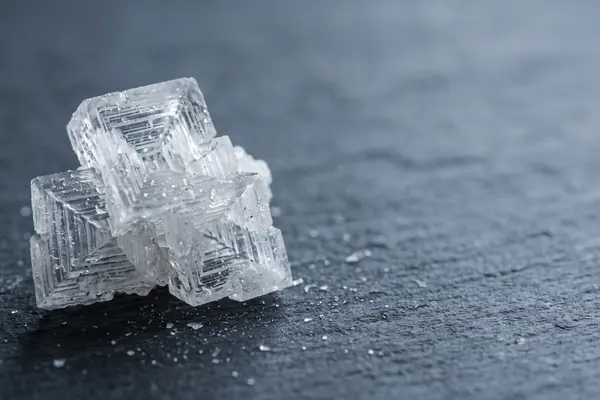
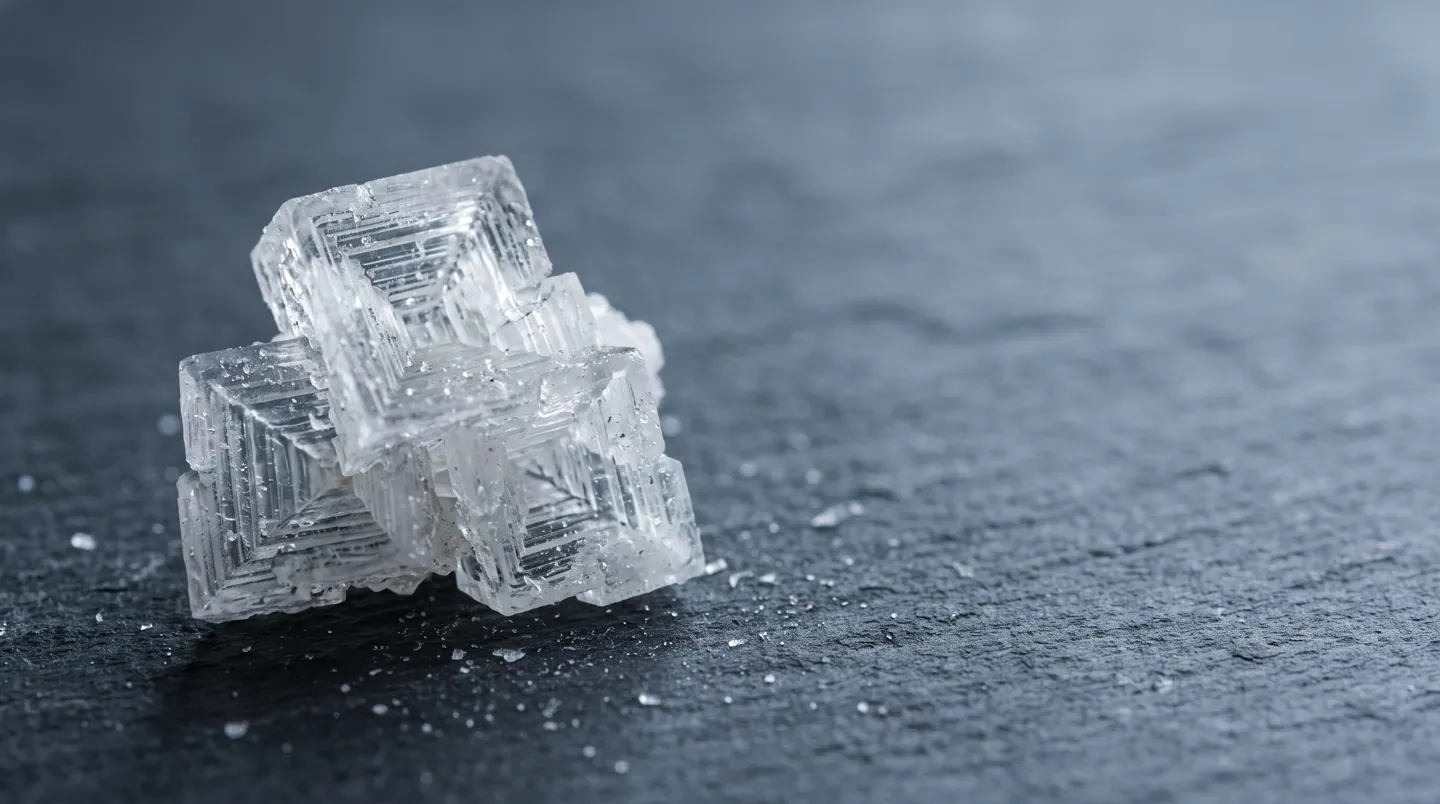
Many grains are tiny cubes. Salt, fool's gold and a handful of other minerals grow into square-sided shapes on their own, because the atoms inside them stack in a pattern that is itself made of cubes.
6 : 6 neighbours in salt
THE SHORT ANSWER
A crystal's outside shape echoes its inside.
Three cubes worth knowing.
SALT
Sodium and chloride ions alternate in all three directions. Each sodium ion is touched by six chloride ions, and each chloride by six sodium ions.
See the numbersFOOL'S GOLD
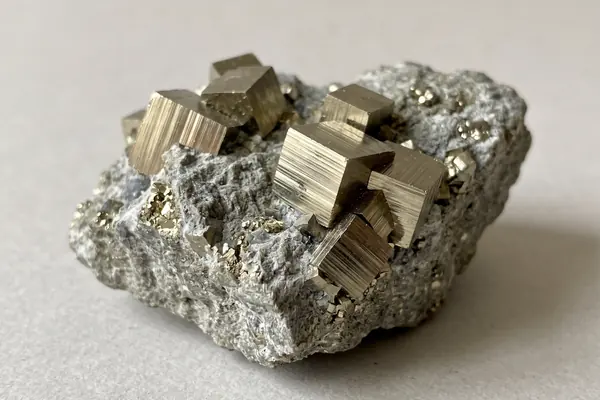
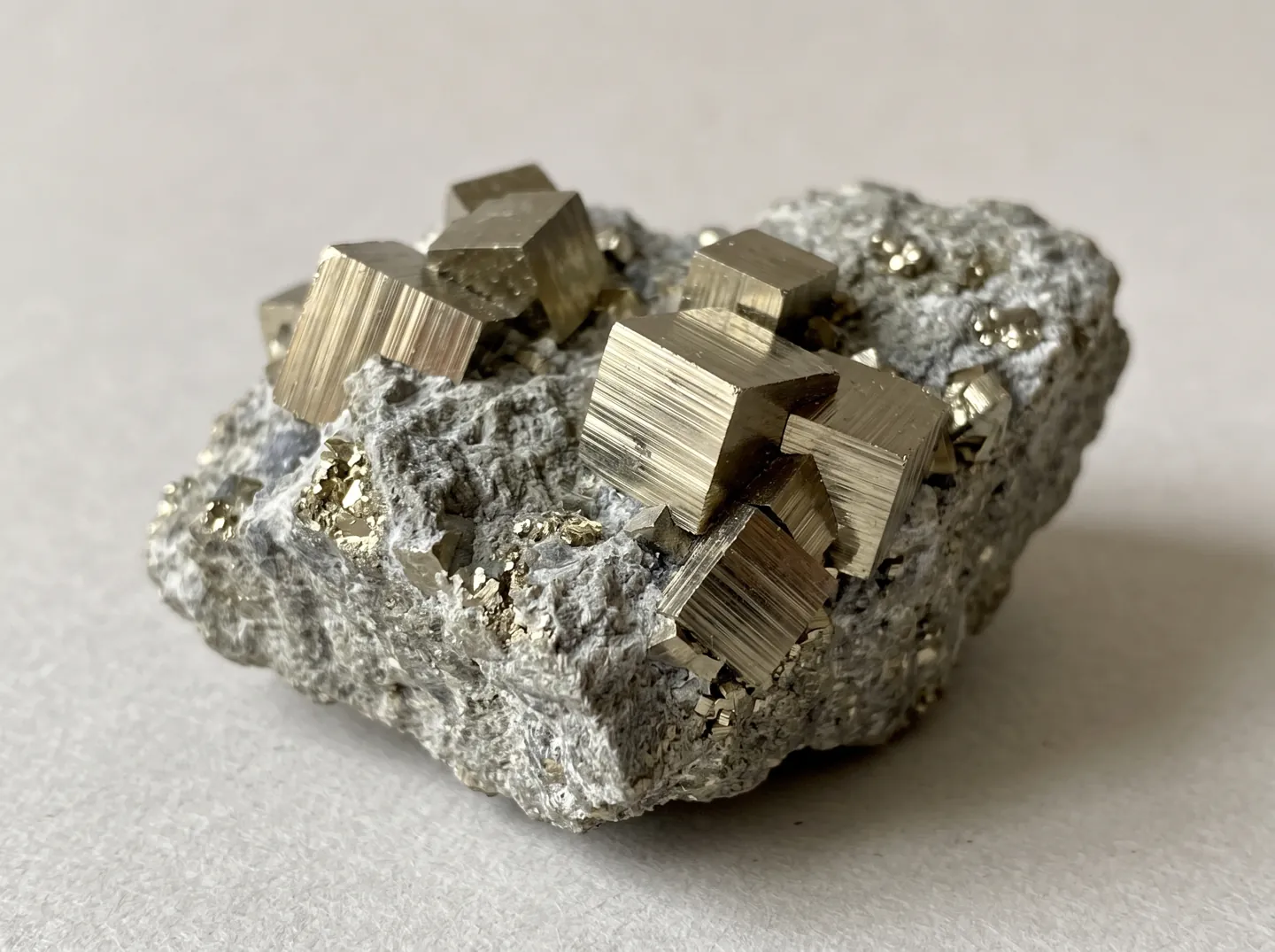
Pyrite, iron sulfide, often grows as cubes with striated faces. Its gold colour fooled prospectors, but it is brittle where gold bends.
Compare the mineralsGROW YOUR OWN
Salt crystals form as salty water evaporates. Slower evaporation can give larger crystals, so patience pays.
Try it at homeCOMPARE THE MINERALS
All four belong to the cubic (isometric) crystal system. Pick one to see how hard it is on the Mohs scale and how it breaks. The bar shows hardness.
Mohs hardness runs from 1 (talc) to 10 (diamond). Values from geology.com mineral profiles.
TWO NUMBERS WORTH KNOWING
One number from inside the salt lattice,
one you can see when salt breaks.
6 chloride
Ions touching each sodium ion
Sodium chloride is described as 6:6 co-ordinated. Six is the most chloride ions that fit around a sodium ion before they touch each other and start to repel.
SALT LATTICE · CHEMGUIDE
90°
Angle between halite's cleavage planes
Halite and galena both cleave perfectly in three directions at right angles, which is why their broken fragments look like small cubes and rectangular blocks.
CLEAVAGE · GEOLOGY.COM
Caesium chloride has the same simple formula but a different structure: its larger positive ions make room for eight neighbours each, giving 8:8 co-ordination.
GROW A SALT CUBE
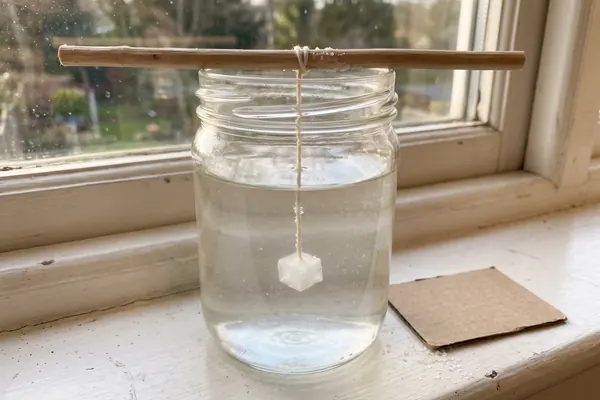
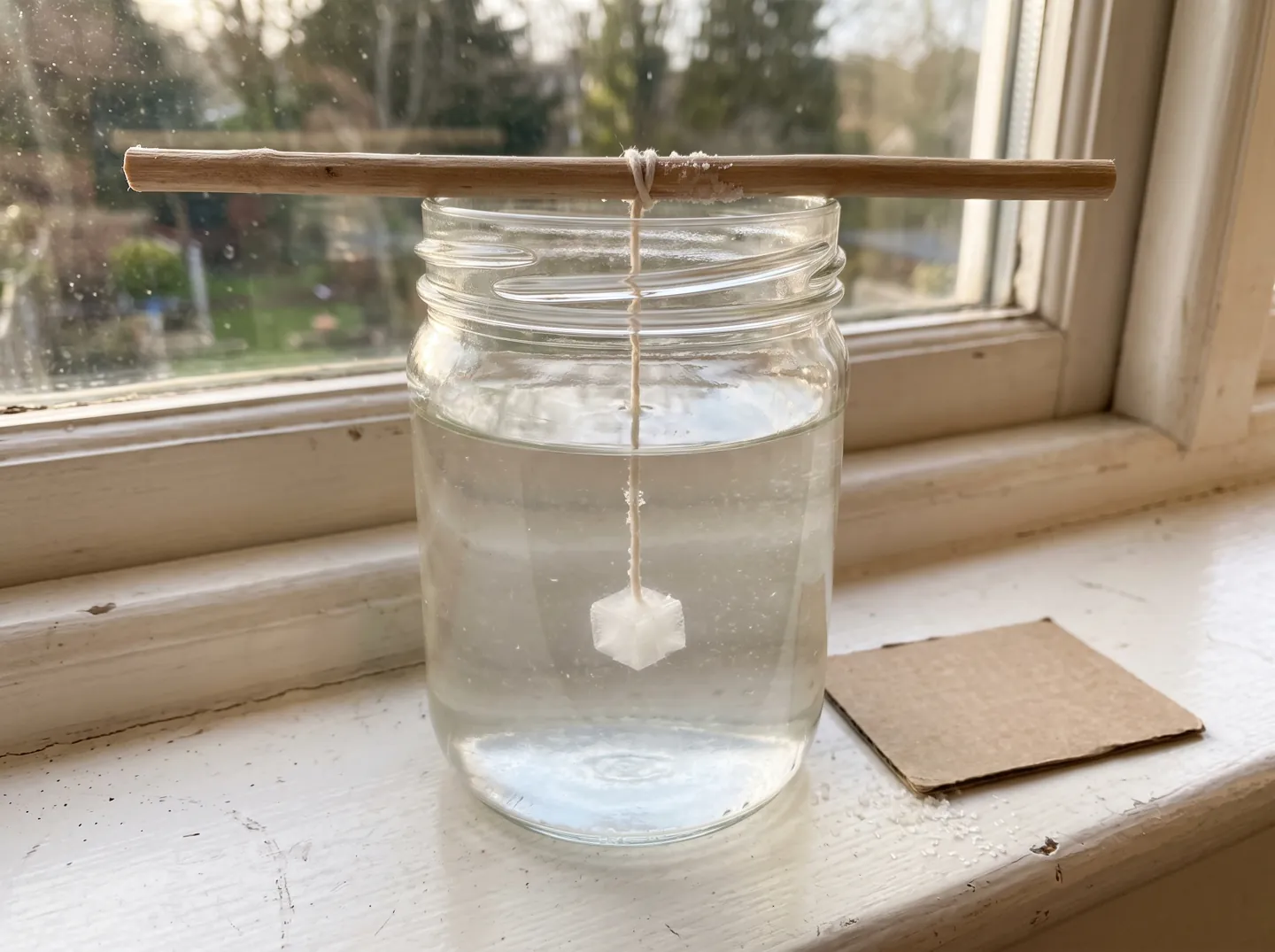
This classroom activity from Earthlearningidea needs only salt, hot water, a jar and a thread. Ask an adult to help with the hot water.
Slowly dissolve about 50 g of salt in about 250 ml of hot water.
Glue a single salt grain to a thin thread and dangle it in the solution from a stick laid across the top.
Cover the jar loosely with card to keep dust out, and leave it for a week or two.
The prize shape is a cube with stepped, hollow faces. Slower evaporation tends to give bigger crystals.
CUBES IN ROCKS
Halite forms mainly where seawater or salty lake water evaporates, and repeated episodes have left salt deposits thousands of feet thick. Some ancient salt flats left cube-shaped casts: the salt dissolved and clay filled the cubic holes.
Pyrite's name comes from the Greek for fire, because struck against metal it can throw sparks. It often forms alongside gold, and some pyrite holds enough gold to be worth mining.
Questions
Sodium and chloride ions alternate in a lattice in all three directions, with each ion touching six of the other kind. That repeating pattern is built from cubes, and well-formed crystals show it on the outside.
Not always. Most of us only see tiny grains or shapeless lumps. Earthlearningidea notes that slower evaporation can give larger crystals, and the prize shape is a cube with stepped, hollow faces.
Pyrite, an iron sulfide. Its brassy colour, metallic lustre and weight fooled inexperienced prospectors. Gold bends under pin pressure and leaves a yellow streak; pyrite is brittle and leaves a greenish-black streak.
No. Halite and galena cleave in three directions at right angles, but fluorite has four directions of cleavage and pyrite has none, breaking with a curved fracture.
The Earthlearningidea activity suggests leaving a seed crystal hanging in strong salt solution for a week or two, or for as long as it takes.
Sources
ABOUT THIS NAME
doodlecubify.com is part of the DoodleSale portfolio. It isn't in an auction right now, but you can ask about leasing it.